
In elite wellness circles, longevity has become a defining lifestyle priority—one that blends science, luxury, and personalization. For high-net-worth individuals, health is increasingly viewed as a form of capital, with resources directed toward strategies that preserve vitality, optimize performance, and extend quality of life. The following trends represent the most influential movements shaping the modern longevity landscape.
1. Concierge LongevityMedicine
Private, physician-led care has become a cornerstone of modern longevity strategy among affluent clients.
Rather than waiting for illness, high-net-worth individuals are investing in preventive, highly personalized care that includes advanced diagnostics, metabolic testing, and tailored wellness protocols. Concierge physicians frequently offer same-day access, home visits, and long-term health optimization plans that focus on performance, prevention, and aging well.
This shift reflects a broader transition from traditional healthcare to precision wellness, where prevention is prioritized over treatment.
2. Longevity Clinics and Preventive Diagnostics
Luxury longevity clinics are expanding rapidly worldwide, offering services designed to measure biological aging and detect risks early.
These facilities often include:
- Full-body imaging
- Advanced blood panels
- Genetic and biomarker testing
- Hormone and metabolic analysis
- Biological age assessments
The global market for longevity clinics is growing quickly, with significant investments flowing into physician-led preventive health platforms and multi-site longevity centers.
For affluent individuals, this represents a powerful shift: investing in early detection rather than reactive treatment.
3. Medical Wellness Travel and Longevity Retreats
Luxury travel is increasingly centered on restoration rather than recreation.
High-net-worth travelers are now choosing destinations that combine hospitality with medical-grade wellness services. These experiences may include:
- Comprehensive health assessments
- IV therapy and nutrient optimization
- Sleep therapy programs
- Brain and cognitive optimization
- Personalized fitness and recovery programs
Some high-end wellness destinations now offer packages costing tens of thousands of dollars, reflecting growing demand for science-based wellness integrated into luxury travel.
Notably, wellness experiences have become a major driver of travel decisions, with a large majority of luxury travelers prioritizing wellness features when selecting destinations.
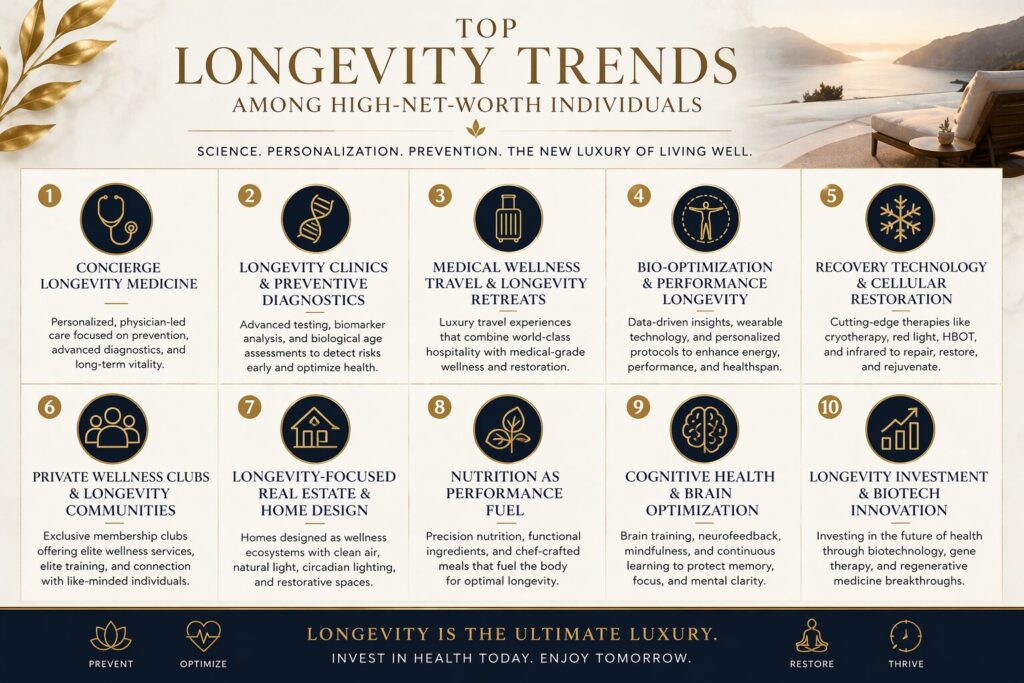
4. Bio-Optimization and Performance Longevity
Rather than simply extending lifespan, many affluent individuals are focused on maximizing performance across decades.
Bio-optimization includes tools such as:
- Wearable health tracking devices
- Continuous metabolic monitoring
- Targeted supplementation
- Recovery technologies
- Performance-focused nutrition
This approach reflects a growing emphasis on healthspan—the number of years lived with vitality and function, not just longevity alone.
The philosophy mirrors that of elite athletes, where health is measured, tracked, and continually optimized.
5. Recovery Technology and Cellular Restoration
Recovery has become one of the most heavily invested areas in longevity wellness.
Popular technologies include:
- Hyperbaric oxygen therapy
- Cryotherapy
- Infrared therapy
- Red-light therapy
- Cold immersion and contrast therapy
These treatments aim to enhance cellular repair, reduce inflammation, and support long-term tissue health. Demand for recovery technologies has surged globally, particularly among health-conscious professionals and entrepreneurs.
In modern longevity culture, recovery is no longer optional—it is strategic.
6. Private Wellness Clubs and Longevity Communities
Social wellness is becoming an elite status symbol.
Private wellness clubs—designed to combine medical expertise, fitness, recovery, and social interaction—are growing rapidly in major global cities. These environments offer both exclusivity and community, allowing members to integrate wellness into their daily routines.
Recent trends show increased demand for private wellness membership spaces, offering personalized care and immersive health experiences within highly curated environments.
Connection, purpose, and community are now recognized as key contributors to long-term health.
7. Longevity-Focused Real Estate and Home Design
Homes are increasingly being designed as wellness ecosystems.
Luxury residences now incorporate:
- Advanced air filtration
- Circadian lighting systems
- Home wellness suites
- Cold plunge pools and saunas
- Biophilic design elements
Wellness-focused real estate is one of the fastest-growing segments within the global wellness economy, reflecting increasing demand for environments that actively support long-term health.
For affluent homeowners, health-conscious architecture has become an essential lifestyle investment.
8. Nutrition as Performance Fuel
Nutrition among high-net-worth individuals has shifted from dieting to precision fueling.
Rather than focusing solely on calories or weight loss, modern longevity nutrition emphasizes:
- Nutrient density
- Anti-inflammatory foods
- Functional ingredients
- Personalized dietary strategies
- Chef-driven wellness cuisine
Plant-forward eating remains central to many longevity approaches, supported by growing interest in functional foods and nutrient-rich beverages designed to support metabolic health.
Dining has become not just nourishment—but performance strategy.
9. Longevity Investment and Biotechnology
Perhaps the most dramatic trend is financial investment in longevity science itself.
Wealthy investors are funding research in:
- Gene therapy
- Regenerative medicine
- Organ replacement technologies
- Cellular repair science
Private longevity funds and biotech ventures are exploring experimental therapies designed to slow aging and extend functional life, demonstrating how longevity is becoming both a scientific and financial frontier.
Longevity is no longer just a lifestyle—it is an industry.
10. The Shift Toward Health as the Ultimate Luxury
Underlying all these trends is a fundamental cultural shift: health is becoming the new symbol of wealth.
Luxury is no longer defined only by possessions, but by:
- Vitality
- Mobility
- Cognitive clarity
- Independence
- Longevity
For many high-net-worth individuals, the pursuit of longevity is less about vanity and more about preserving the ability to live fully—physically, mentally, and socially—for decades to come.
This evolution signals a powerful truth:
In the modern luxury economy, time and health are the most valuable assets of all.