Copenhagen’s boundary-breaking Alchemist is rewriting the rules of fine dining with “Intermission”—five months each year devoted entirely to experimentation, art, technology and the pursuit of what comes next.
Alchemist Is Closing for Five Months a Year — But Not for the Reason You Think. In a world of fine dining where coveted tables disappear within moments and the pressure to remain perpetually open is relentless, Alchemist is choosing something increasingly rare: time.
Beginning in December 2026, Copenhagen’s extraordinary culinary destination will close its doors to regular service for five months each year. But this is no seasonal hiatus.
It is Intermission.
The radical new chapter will see founder and Head Chef Rasmus Munk and his team step away from daily service and devote nearly half the year to research, experimentation and artistic development. When the restaurant returns, the intention is not simply to unveil a new menu, but to present a new incarnation of Alchemist itself.
“This feels like the beginning of a new chapter. We are turning our entire way of working upside down, because we think there is so much more to explore,” says Munk. “For us, it will be a period of metamorphosis, rebuilding ourselves from within.”
When a Restaurant Becomes a Stage
Since opening in Copenhagen in 2019, Alchemist has challenged almost every convention associated with the traditional fine-dining restaurant.
Munk calls his philosophy Holistic Cuisine—a collision of gastronomy, art, performance, technology, activism and science.
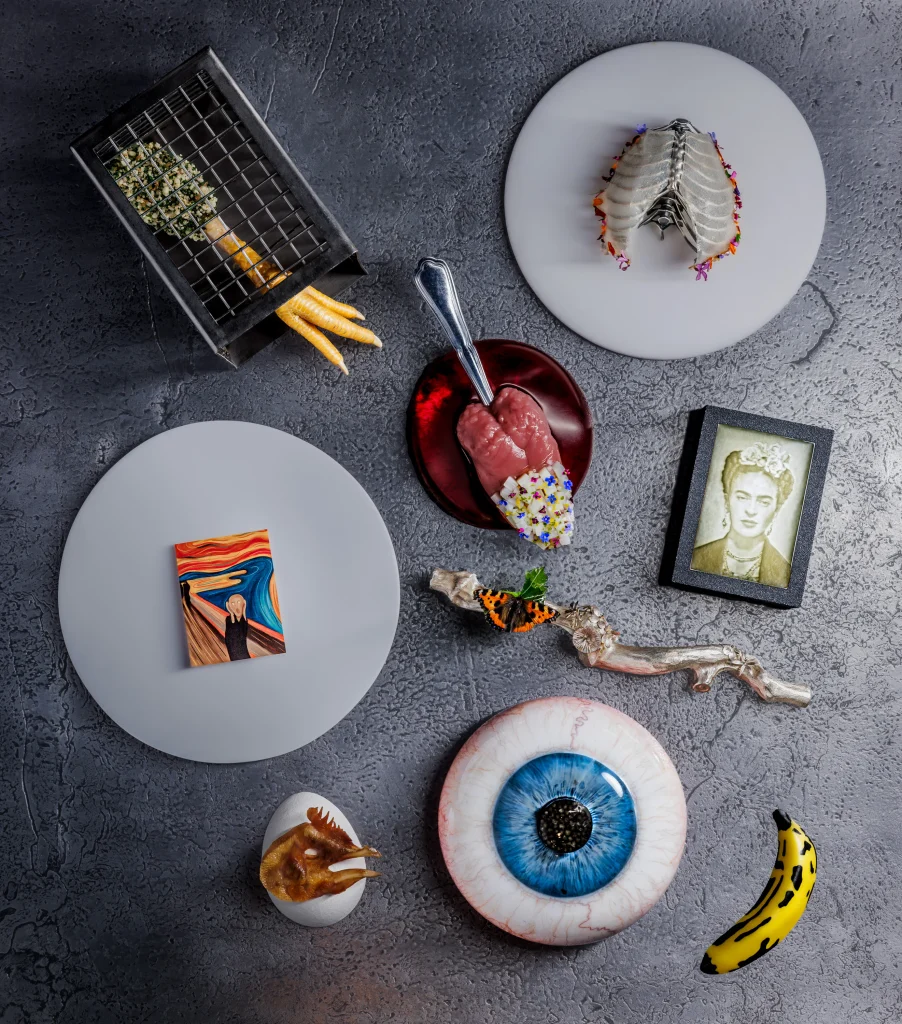
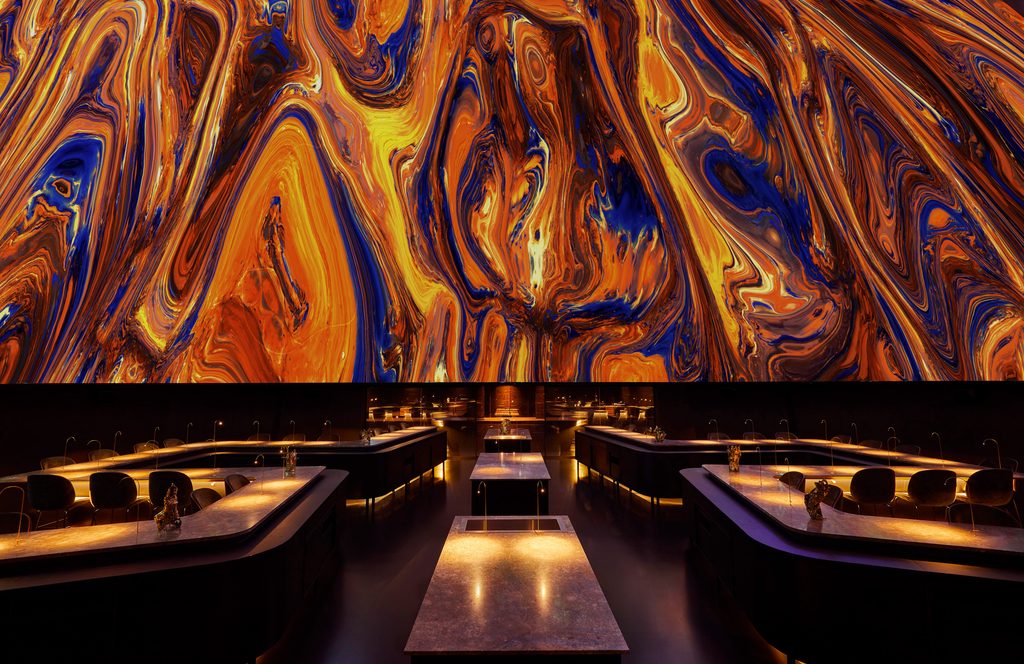
The experience unfolds over approximately five hours, with more than 30 edible “impressions” presented amid theatrical performances, installations and constantly evolving visual worlds. At its center is Alchemist’s vast planetarium dome, enveloping diners in projections that transform the room—and often the emotional context of what arrives on the plate.
The result sits somewhere between dinner, theatre, contemporary art and social commentary.
And demand has been extraordinary. Alchemist has remained fully booked since opening, with the restaurant reporting more than one million guests on its waiting list.
Yet success, for Munk, appears to have created another question: How do you continue creating something genuinely new when you are constantly performing the existing version?
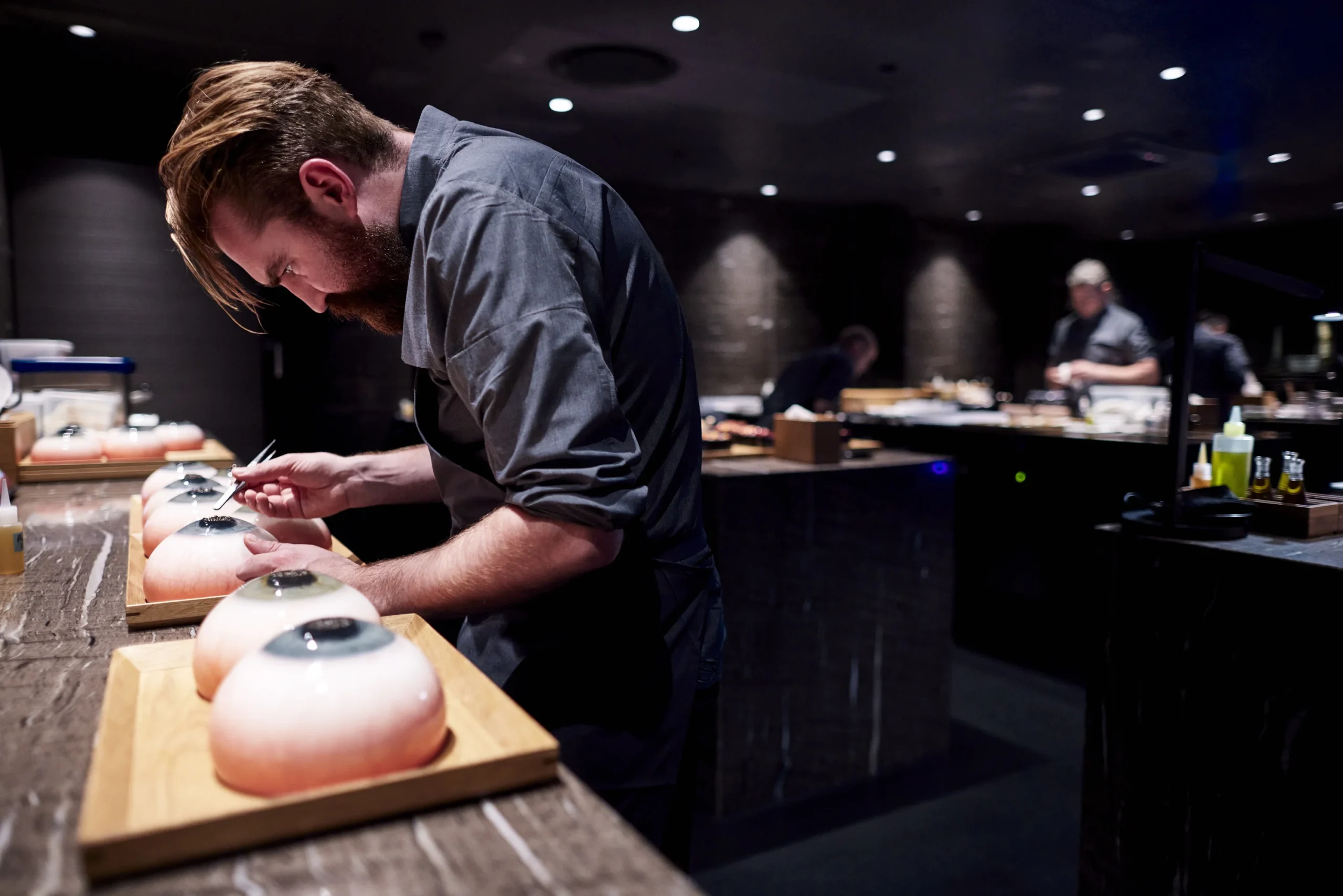
Head Chef Rasmus Munk
Borrowing From the Worlds of Art and Theatre
The inspiration for Intermission comes partly from creative disciplines outside gastronomy.
Artists retreat to studios. Theatre companies rehearse before opening night. Musicians disappear to write and record before returning to the stage.
Restaurants, by contrast, are generally expected to create while simultaneously serving guests night after night.
Munk wants to change that.
“I have often looked at the worlds of art, theatre and music with a certain envy,” he explains. “There is an understanding in these fields that ambitious creative work requires dedicated periods of exploration before it meets an audience.”
Rather than attempting to invent Alchemist’s future between dinner services, the restaurant will now give its team five uninterrupted months to pursue it.
Impression name Butterfly. This impression features a freeze-dried Nettle butterfly on a crispy nettle leaf made from juiced kale, parsley, and spinach and fresh nettle cheese. The farmed butterflies come from our farmer Leif who raises them on only nettles in a greenhouse. Butterflies contain almost 4 times the protein of beef and chicken and could be a possible protein source in the future. Silverware design by Nicolai Appel
Inside the Alchemist Laboratory
Intermission will extend far beyond the kitchen.
Alchemist’s Front of House team will investigate how psychology, choreography, performance and storytelling might reshape the traditional relationship between guest and restaurant.
In the kitchen, hundreds of ideas will be developed and tested, while research journeys will take the team deeper into food traditions and cultures around the world.
Experts from gastronomy—and from disciplines far beyond it—will be invited into the creative process, bringing unexpected perspectives to Copenhagen.
Meanwhile, Alchemist’s studio team will experiment with the next generation of immersive and interactive technology, exploring new ways for diners to engage with the extraordinary environment surrounding them.
For a restaurant already famous for blurring boundaries, Intermission effectively turns Alchemist itself into a five-month creative laboratory.
More Than 100 Minds, 30 Nationalities
Perhaps the most intriguing aspect of the experiment is that Munk does not intend for Alchemist’s next chapter to emerge from the mind of a single chef.
The restaurant employs more than 100 people representing over 30 nationalities.
Their cultures, childhood memories, flavors, techniques and perspectives will become part of the development process.
“Intermission gives everyone the opportunity to bring their knowledge into what we create next,” says Munk. “When your ambition is to create the best experience in the world, time is without doubt the most important ingredient.”
It is a significant philosophical shift.
Instead of viewing the restaurant team primarily as the people who execute an established experience, Alchemist is positioning them as collaborators in creating the next one.
Behind the Curtain
Closing for regular dinner service will not mean Alchemist disappears entirely.
During Intermission, the restaurant plans to offer backstage tours, inviting a wider audience into the normally elusive world behind the experience.
Visitors will be able to explore Alchemist’s immersive spaces, discover the ideas and creative processes behind previous seasons, and sample selected flavors and beverages from the restaurant’s past.
For Munk, this also touches upon a larger ambition: making ambitious gastronomy more culturally accessible.
“I wish that the experience at Alchemist could be accessible to more people, both in terms of pricing and available seats,” he says.
His longer-term hope is that gastronomy might eventually be recognized and supported as an artistic discipline in much the same way societies support theatre, opera and museums.
Intermission, in a small way, begins testing what that future might look like.
A Restaurant Reopening Like a Premiere
When Alchemist emerges from each Intermission, diners should not expect merely a handful of new dishes.
The menu will be transformed. Art installations will be reconsidered. New immersive projections will appear beneath the planetarium dome. Technology, performance and storytelling will evolve alongside the food.
Munk describes the reopening not as the beginning of another restaurant season, but as something closer to a theatrical premiere.
“I don’t want Alchemist to simply reopen. I want it to feel like a premiere—a new chapter, with a new expression.”
His ambition is for every incarnation to push beyond the one before it: “wilder, more relevant and more ambitious.”
Can Fine Dining Afford to Stop?
There is, of course, an audacious business question behind the creative one.
What restaurant at this level voluntarily gives up five months of regular service?
Alchemist says its self-sustaining business model makes the experiment possible. Beginning with its next incarnation, the restaurant will also introduce a single price encompassing the complete Alchemist experience, including beverages.
Munk says the change is not designed simply to make dinner more expensive. More than 70 percent of guests already select one of the restaurant’s seven beverage pairings, meaning the total expenditure for many diners is expected to remain largely comparable.
Instead, the new structure helps fund something almost unheard of in modern restaurants: protected creative time.
And perhaps that is the most provocative idea behind Intermission.
The restaurant industry has traditionally measured success partly through occupancy—how many seats can be filled, how often and for how long.
Alchemist is asking a different question:
What might a restaurant become if it occasionally stopped being a restaurant?
Universe in the planetarium dome inspired by Edvard Munchs painting The Scream
The Final Curtain Before Intermission
November 2026 will mark the final opportunity to experience the current incarnation of Alchemist before its first Intermission begins in December.
The five-month creative period will also feature a program of special events, with additional details expected to be revealed later this autumn.
When the doors eventually reopen, returning guests may recognize the extraordinary dome and the theatrical architecture.
What happens beneath it may be entirely different.
For Alchemist, that is precisely the point.
In luxury, true rarity has never simply been about price. Increasingly, it is about access, imagination—and perhaps the greatest luxury of all:
the time to create something that has never existed before.